
Undersea Cabling Project to Bring Fibre Internet to Tancook Islands
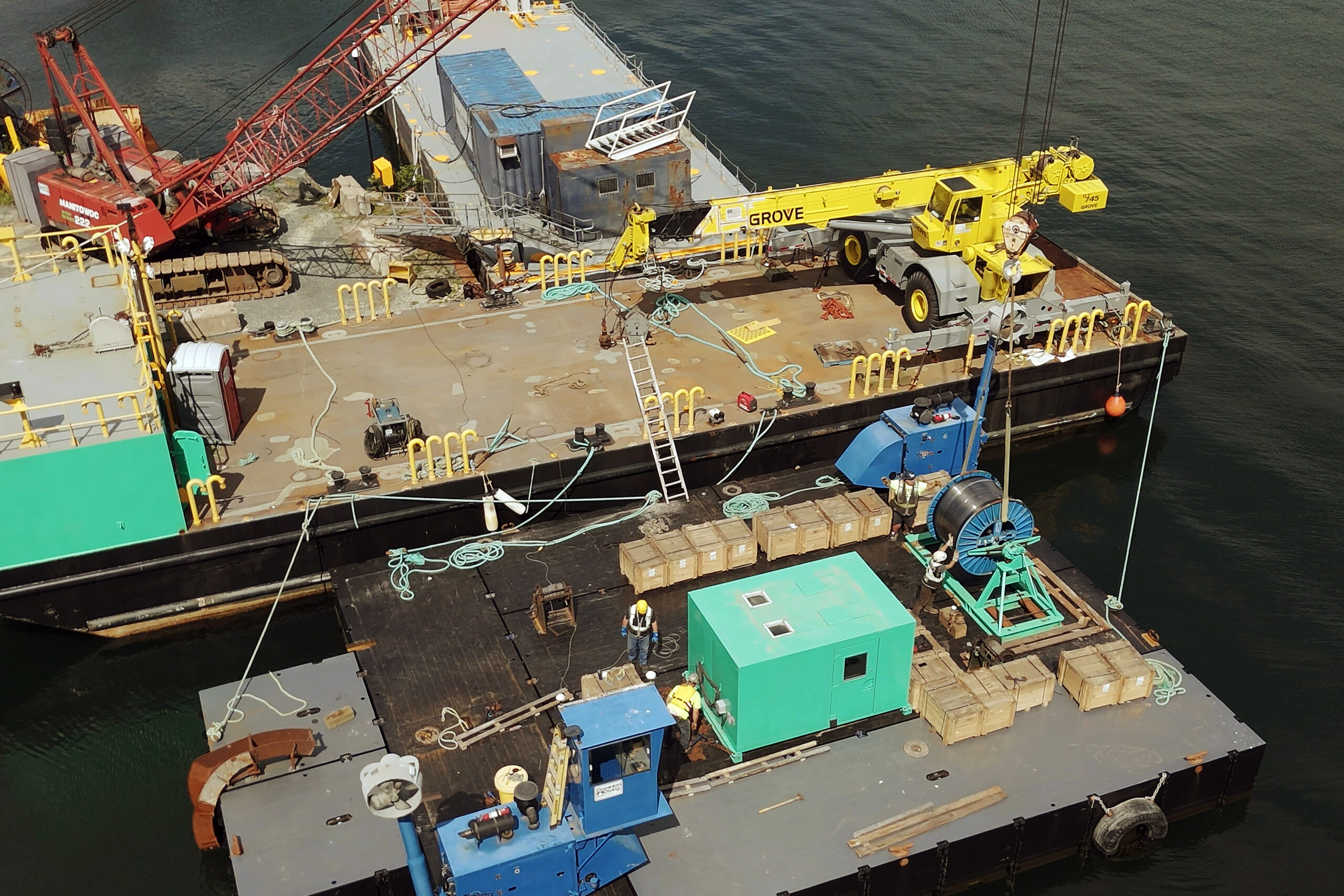
More than 180 homes and businesses on Big and Little Tancook islands off the coast of Chester will soon get reliable, high-speed internet service.
The Internet for Nova Scotia Initiative project involves laying nearly six kilometres of submarine fibre optic cable along the ocean floor to connect the mainland with both islands.
“The Tancook Islands are an important part of Nova Scotia’s coastal communities. By utilizing what surrounds us – the ocean – the Internet for Nova Scotia Initiative and our partners are bringing fibre service to the islands, supporting residents, small businesses and visitors with access to the services and opportunities they need,” said Danielle Barkhouse, MLA for Chester-St. Margarets, on behalf of Public Works Minister Fred Tilley, who shares ministerial responsibility for Build Nova Scotia.
The project will enable Bell fibre-optic connections to homes and businesses on the islands and requires specialized marine equipment, environmental approvals and carefully co-ordinated construction. It is the only project under the Internet for Nova Scotia Initiative to use this approach.
Cabling supplies and equipment are being taken this week by barge from Halifax Harbour to a staging area in Blandford, where work will soon begin on the installation. About eight kilometres of aerial fibre will also be installed, with the project expected to be complete early in the fall.
Led by Build Nova Scotia, the Internet for Nova Scotia Initiative has helped deliver reliable, high-speed internet access to almost 100 per cent of underserved Nova Scotian homes and businesses through a mix of providers and technologies. Nova Scotia is believed to be the first province or territory in Canada to achieve this level of coverage.
It was established in 2018 with an investment of $193 million for the independent Nova Scotia Internet Funding Trust. To date, the trust has invested close to $186 million, leveraging an additional $197 million from other funders, including $146 million from the private sector. The Province invested an additional $8.5 million for the Satellite Internet Service Rebate Program, also administered by the trust.
Quotes:
“Connecting Canadians is at the core of what we do. Bell has spent decades bringing connectivity to rural, remote and hard-to-reach communities across Canada, building deep expertise in complex network deployments, including subsea fibre infrastructure. We are proud to bring that experience to the Tancook islands through this important initiative, helping deliver reliable, high-speed connectivity to residents and businesses.”
— Mark McDonald, Executive Vice-President and Chief Technology Officer, Bell Canada
“Access to reliable high-speed internet is vital for rural communities. The Municipality of the District of Lunenburg has long advocated for improved broadband service across rural Nova Scotia, and we are pleased to see this project moving forward for Big and Little Tancook islands. Thanks to this collaboration led by Build Nova Scotia and Bell, residents will soon have access to fibre-to-the-home service that will strengthen connectivity, support economic opportunities and improve access to services.”
— Elspeth McLean-Wile, Mayor, Municipality of the District of Lunenburg
Quick Facts:
– Internet for Nova Scotia Initiative projects must meet or exceed minimum Canadian Radio-television and Telecommunications Commission (CRTC) speeds
– more than 103,000 underserved locations across the province have access through the initiative with fewer than 500 remaining; final projects are mainly in geographically challenging areas
– residents of the Tancook islands currently have access through fixed wireless and the provincial Satellite Internet Service Rebate Program, intended for locations where reliable high-speed wired or wireless internet is not feasible or in a project area not complete
– the South Shore project area, including the Tancook islands, received about $37 million combined from the trust, the Municipality of the District of Lunenburg, Bell Canada, Eastlink and other partners; this marks the final phase for this area